Aug 22, 2010

Thaton ท่าตอน, the mountains, the Mae Kok River and the hilltribes

See the locations on Thaton Google Map
See the Thai Meteorological Weather forecast for Chiang Rai


Picture fredalix - อาลิกส์
The little town of Thaton and the Kok river. The river come from Burma and flows to Chiang Rai.

Boat from Thaton to Chiang Rai:
The Mae Kok Boat Service Company departs at Thaton every day at 12.30 pm (350 Bath). The trip takes around three hours. The Mae Kok River runs through dense jungle. You will see hilltribe villages on the banks - for example the Karen village of Ruammit, where the Karen keep elephants and use them for tourist rides or transport to other villages. In the late afternoon the elephants bath in the river. Read blackntan210's adventure on the river. Around 20 minutes up from Ruammit you reach Phasoet hot springs บ่อน้ำพุร้อนผาเสริฐ.
Boat from Chiang Rai to Thaton: Departure 10.30 am
Charter a boat: You can visit Shan or Lahu villages along the river.
Bamboo House Rafting on Mae Kok River:

Picture fredalix - อาลิกส์

Picture Argenberg
Mae Kok River

Picture Electrostatico
Bamboo Boat

Picture Argenberg
Elephants bathing in Mae Kok River


Info about Thaton: Read thaton.info

Map of the Valley: With small villages: iGuideTRavel.


Stay in Thaton

Garden Home Nature Resort: From 200 Bath. Bungalows right on the river. Very good reviews on tripadvisor.com

Ban Suan Riverside Resort: 134 Moo 4. Wooden bungalows with terraces on the river and more rooms in a building and bungalows away from the river.

Thaton River View Resort: Along the banks on Nam Kok River. Basic, as described by Chiang Mai To Thaton

Thaton Chalet: From 1400 Bath.

Old Tree's House: From 1200 Bath. 323. Ban Rumthai
M. 14. Guesthouse with five bungalows and little pool run by Paulo and Nid, a French/Thai couple, who engage with a school project for Chan people, refugess from Burma living nearby. Excellent guesthouse according to reviews on tripadvisor.com
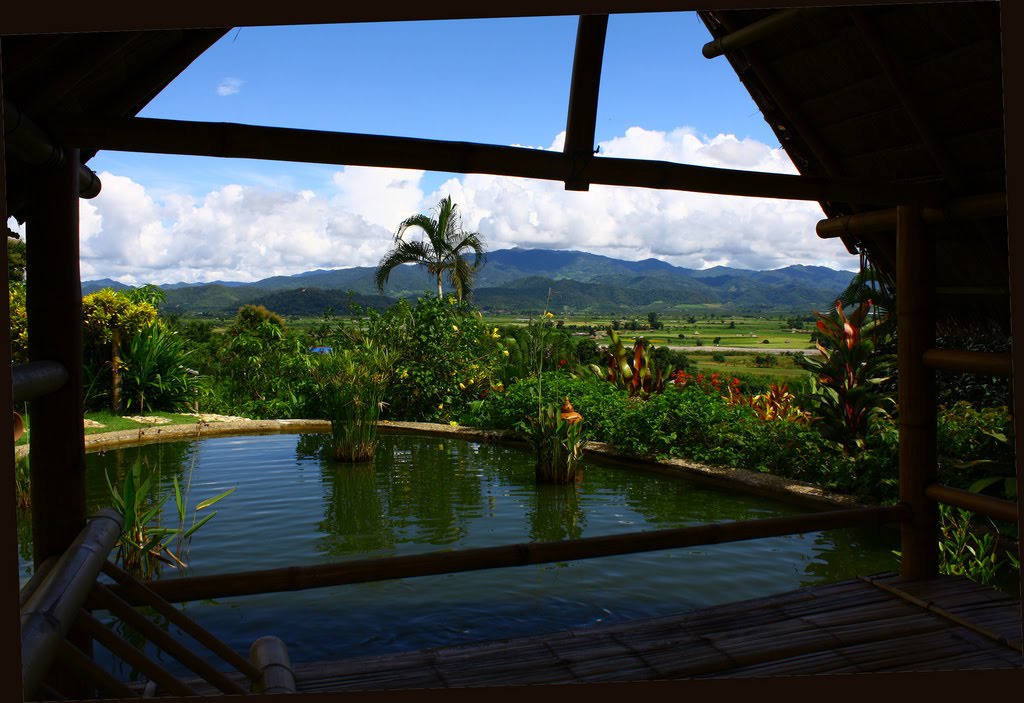
Picture fredalix - อาลิกส์
View from Old Tree's House

Apple Guest House:

Khun Mai Baan Suan Resort: On the banks of Mae Kok River. See video by openchiangmai.com

Mae Kok River Village Resort: From 3250 Bath. On the banks of Mae Kok River. A good place for birdwatching from the resort. With Maekok River Village Outdoor Education Centre

Huai Khum Resort: From 1600 Bath. In the forest, surrounded by Mae Kok River and the mountains, near a traditional village. Bamboo bungalows with straw roof. With swimming pool.


Wat Thaton

Wat Tha Ton (วัดท่าตอน):

Picture Argenberg

Picture fredalix - อาลิกส์

Picture isriya

Picture isriya

Picture isriya
View from Wat Thaton


Hilltribe people around Thaton

Picture Edward
Akha village Ban Lor Cha

Picture All Points East (The South East Asia Specialists
Akha woman weaving in Ban Lor Cha.


Ban Lor Cha Also: Lorcha. Here you find a community-based Tourism Development project in an Akha village. You pay a fee. The income goes into a village development fund. See map of village tour. Read more about the Akha people and this project here. See pictures of Akha women and man and child. See videos of Ban Lorcha. Read a study by Deena Rubuliak about Ecotourism in Northern Thailand.


How to go to Thaton

Bus vom Chiang Mai to Fang and Thaton: 7 am and 3.30 pm. (From Chang Pheuak Bus Terminal)


Recommend this blog on Twitter and Facebook

Jul 17, 2010

Your Guide to Mae Hong Son

You discover Mae Hong Son through the eyes of people, who have been there. This blog collects their voices from blogs and travel-related forums like tripadvisor.com or travelfish.org and their pictures from flickr.com and other sources. Google Maps help you to create your own tour. Links give you background. Welcome to Mae Hong Son!

See the Thai Meteorological Weather forecast for Mae Hong Son


Guesthouses and Hotels: Like Princes Guesthouse.on the lake in the centre of Mae Hong Son Click


Charming Mae Hong Son: Old houses and a lake in the city of the three mists Click


Temples in Mae Hong Son: Wat Chong Khlang contains a Vihara housing a replica of the Phra Phuttha Sihing image brought from Burma in 1857. Click


The nightmarket: Art and handcrafts from hilltribe people, for example Lisu and Hmong. Click


The Kuomintang Chinese: Mae Aw near the Burmese Border is a village founded by Kuomintang soldiers and famous for tea cultivation. Click


By boat to a Karen Village: Karen refugees from Burma live in Huay Pukaen on Pai River, making their money with tourism by showing their longneck women. Click


Mud for clean skin: At Phu klon the mud comes out of the earth between between 60-140 C hot. It's good for your skin and blood circulation. Click


The Mae Hong Son Loop: From Mae Hong Son through the rainforest and the mountains to Pai and Chiang Mai Click


Recommend this guide on Facebook and Twitter:

Sep 14, 2009

Explore Soppong สบป่อง

See the locations of guesthouses and attractions on Pai and Soppong Google Map by #treasuresofthailand

See the Thai Meteorological Weather forecast for Mae Hong Son


Landscape near Soppong, Picture by Rotgutt


Soppong is on the main road from Pai to Mae Hong Son, also called Nae Hong Son loop. It serves as marketplace for the hilltribe people (Karen, Lisu and Lahu) and lies on Lang River. It belongs to the Pang Mapha ปางมะผ้า district. Each Tuesday morning there is a large market along the street, where the hilltribe people sell their handicrafts, fruits and vegetables.


Picture by Saren. See also this picture.


Around Soppong the rainforest is a good place for watching birds, butterflies and wild orchids. Read more about Soppong.

Guesthouses in Soppong

Soppong River Inn:


Picture by 4x4Adventurers


Cave Lodge Guesthouse:

Picture by 4x4Adventurers


Little Eden Guesthouse:


Picture by Saren

Caves around Soppong

Around 10 km upstream you will find Tham Lot, a cave, where the river passes through (picture), and there are many more caves around. (Read article about caves by Citylife Chiangmai, also second article).


Picture by Toine


Picture by Toine


The Cave in a video:


Recommend this blog on Twitter and Facebook

Sep 1, 2009

Mae Hong Son แม่ฮ่องสอน Hotels and Guesthouses

See the location of the hotels, guesthouses and resorts on Mae Hong Son Hotels and Guesthouses Google Map by #treasuresofthailand

Ampha House: 3 Padungmuayto Rd. "Homely", says the review on travelfish.org


Baiyoke Chalet โรงแรมใบหยก ชาเล่ต์: From 1000 Baht. 90 Khumlumpraphat Road. The restaurant has live local folk music in the evening. Read reviews on travelfish.org and tripadvisor.com. Rooms overlooking the back are quieter, notes frommers.com.


Baiyoke Chalet, picture by Asean on Wheels


Fern Resort: From 2500 Baht. A twenty minutes drive outside of the town, with shuttle. Bungalows set in a lush garden in a peaceful und quiet green valley with rice fields. Very good reviews on tripadvisor.com. See pictues by pigsy, newleypurnell and andyknoedler


Fern Resort lies between rice paddies


Greenwood Garden Lodge:
Greenwood Garden is an eco-adventure lodge and retreat center located in Huay Unn Valley of Mae Hong Son, on the southern border of Thampla-Phasua Waterfall National Park.

The lodge will have a main building and 5 Bungalow style villas, each designed, build and funished using local materials, including hardwoods, stone, and clay. The interior funishings and decorations of each villa are unique to a specific culture (i.e. Balinese, Shan, Thai, Hill-Tribe, etc.), including funiture pieces, bedding, decor, art, and textiles.

The lodge hosts individual guests and special interest groups, including adventure travelers, naturalists, educators students, mountain bikers, off-road riders, enduro riders, photographers, painters, botanists, entomologists, ornithologists, and zoologists, to name a few. Yoga, meditation, other personal healing and fitness retreats can reserve the lodge exclusively for their groups.

See their homepage Greenwood Garden Lodge and a lot of Pictures in Panoramioand a video on youtube.com


Imperial Tara: From 2464 Baht. 149 Moo 8, Pang Moo, Muang. A few kilometres outside of the city centre, with shuttle service to town. Quite good reviews on tripadvisor.com


Breakfast terrasse


Swimming pool in front of Tara Imperial Hotel


Johnnie House: Read reviews on travelfish.org


Jongkham Guesthouse: 7 Odon Chaonithat Road. "A row of rather basic chalets set in a garden and a large wooden house with rooms for rent", two minutes from the lake, notes travelfish.org


Jongkham Guesthouse


Mountain Inn Hotel & Resort: From 1400 Baht. 112/2 Kunlumprapas Road. Read mixed reviews on travelfish.org and tripadvisor.com.


Picture by Chuck Holton


Ngamta Hotel: From 800 Baht. 5-9 Khunlumpapas Rd. Good review on travelfish.org


Ngamta Hotel


Palm House: Read reviews on travelfish.org

Panahuts: From 600 Baht. Wooden bungalows in a cultured jungle. 15 minutes to walk to the town. Read review by travelfish.org


Panahuts


Panorama Hotel: From 450 Baht.


Piya Guesthouse: From 600 Baht. 1/1 Khunlumphrapat Soi 3. Basic, near the lake and the centre of Mae Hong Son. Good reviews on tripadvisor.com and travelfish.org. See picture by gunther v and maeghantracy


Princes Guesthouse: Read reviews by travelfish.org


Princes Guesthouse with view towards the lake


Rom Thai Guesthouse ร่มไท เกสท์เฮ้าส์: 22 Cham Nan Sathit Road. Read review on tripadvisor.com


Picture by tomazhg


Rooks Holiday Hotel and Resort
:


Rooks


Sang Tong Huts: Around 10 walking minutes from the market. See gallery by buddhamountain. And read reviews on travelfish.org and tripadvisor.com


The Dai Resort:


The Dai Resort


The Residence Guesthouse:


The Residence


In the mountains near Mae Hong Son:

Ban Ruam Thai and Pang Ung Lake: You can put up your tent under the pines near the lake and find bungalows there (Pang Ung Garden Houses). Call the Royal initiative Pang Tong 2 Project: 0-5369-2056, 0-5368-1740, 0-5368-1323 for reservation of accommodation, which range from Bt1,500 to Bt2,000. Tents are for rent from Bt250 to Bt400.


Bungalows of Pang Tong Project


Ruam Thai Guest House (0-5361-1244) offers rooms with a beautiful-lake view at Bt250 per night.


Ruam Thai Guest House


Walk a bit further to Ban Lung Pa La home stay (0-5369-2144) to experience the local way of life. The room with breakfast and coffee is between Bt100-350 per night.

Be aware, that the weather can be cool, in the winter there can be a thin film of ice on the lake. Read more about Pang Ung. Pang Ung lies around 30 km from Mae Hong Son. Take the route to Pha Seau waterfall until you reach Ban Na Pa Paek and then turn left and go on for 6 km.


The weather is cool throughout the year. In winter, the temperatures hover around 10 degrees Celsius.


Read more:
Your Guide to Mae Hong Son


Recommend this blog on Twitter and Facebook

Dec 13, 2008

Doi Inthanon ดอยอินทนนท์: Rainforest and birds

Picture marhas1


Doi Inthanon ดอยอินทนนท์, formerly known as Doi Ang Ka, is the highest mountaintop in Thailand (2565 meters above sea level. A mountain chain joins it to the Himalayas. It supports Himalayan flora and fauna and is one of the famous birding heavens. Read, what Mong Cor Mun found here and more about birdwatching by green-jungle.com.

Doi Inthanon National Park has beautiful natural scenery as many waterfalls. Read more by Thaiparkwordpress.com. The best period for viewing the waterfalls is May through November, while the best period for viewing wild flowers is December through February and for ornithologists is November through March.

Nearly on the top ypu find the Ang Ka Luang Nature Trail, which was surveyed and designed by Michael MacMillan Walls, a Canadian volunteer biologist who devoted to his work and died from a heart attack on this mountain. This trail, 360 metres long, passes through wet and cold areas in a lush valley. The forest is covered with lichens and wild orchids. Indigenous plants that needs a high level of nutrition, organic deposits, and rare species of birds are seen along the trail.

Picture marhas1
Sphagnum Moss along the Ang Ka Luang Trail.


Picture marhas1


Picture marhas1


Picture marhas1


More on Doi Inthanon: www.tourismthailand.org See also the Photo Gallery by Brian McMorrow.


Discover more:
Your Guide to Chiang Mai


Recommend this blog on Twitter and Facebook

Oct 5, 2008

Old Chiang Mai - discover the Wat Ket Community

See the locations on Chiang Mai Google Map by #treasuresofthailand

It's not so easy today to find authentic scenes of life of Chiang Mai's past. But in Wat Kate, on the East bank of Ping river, there are places, where time seems to stand still. Wat Ket วัดเกตุ community has been trading on Ping River for 500 years. Therefore the architecture is multicultural with Western, Chinese and ethnic influences as Haw Chinese and Khmu. So you find Chinese shop houses, Christian churches, colonial style schools and traditional Lanna buildings, the Dara Academy โรงเรียนดาราวิทยาลัย and the victorian buildings of Prince Royal College and also the around 140 years old wooden house of Doctor Chinda Singhanetre. The RarinJinda Resort has conserved it in its traditiona style and is using the upper floor for traditional Thai massage. Read more here.


Picture Rarinjiinda


Another witness of the past is the "Sala Bart", where women used to bring food to be prepared and presented for merit making.


Wat Ket was also the site of Borneo Company Limited, which had a concession from The Chiang Mai King for 100 years for teak wood. Read the blog of tourcm.blogspot.com

There is a plan of Chiang Mai City, to put Wat Ket into a zone for commerce and construction, where residents are opposiong, as The Nation noted.


Wat Gate Ka Ram วัดเกตุการาม: Also: Wat Ket Garam. See the Gallery of Ram J. This temple has been founded around 1428, it is of Lanna origin, but some buildings show Chinese and European influence. It's first name was Wat Sa Gate. At the center of the temple is the large chedi,whose corners are guarded by garudas. East of the chedi is the ubosot, whose stairs are guarded by nagas. The roof of the viharn has five gables, what is unusual. At the back you find a mirrored tile tree - a decoration you usually find at Lao temples.

Foto by www.differentscene.com

See more pictures


Wat Ketkaram Museum: At the back of Wat Ket. Owned by 87 years old Jack Bain, who's Scottish father William worked for the East Asiatic Company and married a Thai and owned Bains compund. A lot of things from the past life as the first bank notes of Thailand, textiles, ceramics, old grammophones... You will see a collcection of old photographs going back more than 100 years to the early days of western trading with Chiang Mai: Old river boats, markets and temples. Read more at Chiangmainews.com and read about The Life of Jack Bain.


If you turn north from Bain’s compound and the front gate of the temple and turn left to Nakorn Ping bridge you will see a teak house, that belonged to the former prime minister, Dr. Sukij Nimmanhemin. A brief walk toward south brings you to Baan Tree House, that belonged to the Tantipong family and “Baan Orapin”, which is an over 90 year old, teak wood residence built in European, colonial style. Such huge houses were usually the home for merchants and another, called “Baan Khun Arak” was the residence of a rice trader. See pictures in an article on chiangmai-chiangrai.com

Picture Derek
Baan Orapin Guesthouse


Read more: The Wat Ket Neighborhood of Chiang Mai.

The history of Chiang Mai: A collection of articles for a book: Click.


Discover more:
Your Guide to Chiang Mai


Recommend this blog on Twitter and Facebook
Sep 7, 2008

Elephants and Elephants - a trip from Chiang Mai to Lampang

Picture marhas1
Elephant Trekking near Chiang Mai

If you sit in front of one of the music bars on Nimmanhaemin Road in Chiang Mai at night, you can be nearly sure, that a mahout with his elephant will pass by and try to sell you bananas or sugar cane to feed the elephant. More than 200 elephants are said to wander around in Thailands cities, from Phuket to Bangkok and Chiang Mai. And that means stress for the animals: standing and walking on the concrete damages their feet, street- and bar-noise irritate them and the polluted air is poison for their lungs, and sometimes they are injured by traffic accidents (read the report by Cindy Tilney). But since Thailands government 1989 banned the logging with elephants in the wood - to protect the wood and prevent erosion and floods - the elephants and their trainers have to look for another income to survive. The ban let 2000 animals and their mahouts unemployed. But a way to employ elephants has been developped: Many camps have been created in a natural surrounding for a get-together of elephants and tourists. Many treat their elephants well, but some don't have proper working conditions for the animals. So if you want to be sure to do someting for the protection of the elephants, you can head to the National Elephant Institute in Lampang. There are shows presenting the traditional logging work, of course you can go riding on a saddle, but there is a homestay program too: You will stay at the home of the mahout, accompany him during his day with the elephants and learn how to ride without a saddle. And some elephants even know how to play music in an elephant orchestra - read more.

Find your way: Take a bus at Chiang Mai Arcade Bus Station for Lampang (timetable). One way will take one and half an hour. Ask the driver to stop at the elephant center. Another possibility is to travel by train, but the trains to Lampang leave Chiang Mai only in the afternoon (see timetable), so you will have to stay for a night in Lampang to go to the elephant shows in the morning. In Lampang you take the bus for Chiang Mai at the bus station and ask the driver to let you out at the elephant center.


Discover more:
Your Guide to Chiang Mai