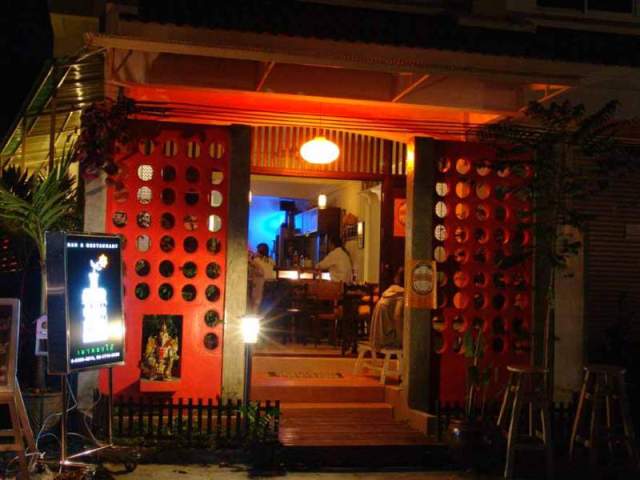
Lanna (Englisch: One Million Rice Fields) was a kingdom in the north of Thailand around the city of Chiang Mai. This blog is about Chiang Mai
ภาษาไทย, Pai, Mae Hong Son เชียงใหม่ ปาย แม่ฮ่องสอน and Nan น่าน. You find reviews and pictures by people who have been there, Google Maps and background.
More destinations in Thailand: #treasuresofthailand: Your Thailand Guide
You discover Mae Hong Son through the eyes of people, who have been there. This blog collects their voices from blogs and travel-related forums like tripadvisor.com or travelfish.org and their pictures from flickr.com and other sources. Google Maps help you to create your own tour. Links give you background. Welcome to Mae Hong Son!
Guesthouses and Hotels: Like Princes Guesthouse.on the lake in the centre of Mae Hong Son Click
Charming Mae Hong Son: Old houses and a lake in the city of the three mists Click
Temples in Mae Hong Son: Wat Chong Khlang contains a Vihara housing a replica of the Phra Phuttha Sihing image brought from Burma in 1857. Click
The nightmarket: Art and handcrafts from hilltribe people, for example Lisu and Hmong. Click
The Kuomintang Chinese: Mae Aw near the Burmese Border is a village founded by Kuomintang soldiers and famous for tea cultivation. Click
By boat to a Karen Village: Karen refugees from Burma live in Huay Pukaen on Pai River, making their money with tourism by showing their longneck women. Click
Mud for clean skin: At Phu klon the mud comes out of the earth between between 60-140 C hot. It's good for your skin and blood circulation. Click
The Mae Hong Son Loop: From Mae Hong Son through the rainforest and the mountains to Pai and Chiang Mai Click
Soppong is on the main road from Pai to Mae Hong Son, also called Nae Hong Son loop. It serves as marketplace for the hilltribe people (Karen, Lisu and Lahu) and lies on Lang River. It belongs to the Pang Mapha ปางมะผ้า district. Each Tuesday morning there is a large market along the street, where the hilltribe people sell their handicrafts, fruits and vegetables.
Around 10 km upstream you will find Tham Lot, a cave, where the river passes through (picture), and there are many more caves around. (Read article about caves by Citylife Chiangmai, also second article).
Ampha House: 3 Padungmuayto Rd. "Homely", says the review on travelfish.org
Baiyoke Chalet โรงแรมใบหยก ชาเล่ต์: From 1000 Baht. 90 Khumlumpraphat Road. The restaurant has live local folk music in the evening. Read reviews on travelfish.org and tripadvisor.com. Rooms overlooking the back are quieter, notes frommers.com.
Fern Resort: From 2500 Baht. A twenty minutes drive outside of the town, with shuttle. Bungalows set in a lush garden in a peaceful und quiet green valley with rice fields. Very good reviews on tripadvisor.com. See pictues by pigsy, newleypurnell and andyknoedler
Fern Resort lies between rice paddies
Greenwood Garden Lodge:
Greenwood Garden is an eco-adventure lodge and retreat center located in Huay Unn Valley of Mae Hong Son, on the southern border of Thampla-Phasua Waterfall National Park.
The lodge will have a main building and 5 Bungalow style villas, each designed, build and funished using local materials, including hardwoods, stone, and clay. The interior funishings and decorations of each villa are unique to a specific culture (i.e. Balinese, Shan, Thai, Hill-Tribe, etc.), including funiture pieces, bedding, decor, art, and textiles.
The lodge hosts individual guests and special interest groups, including adventure travelers, naturalists, educators students, mountain bikers, off-road riders, enduro riders, photographers, painters, botanists, entomologists, ornithologists, and zoologists, to name a few. Yoga, meditation, other personal healing and fitness retreats can reserve the lodge exclusively for their groups.
Imperial Tara: From 2464 Baht. 149 Moo 8, Pang Moo, Muang. A few kilometres outside of the city centre, with shuttle service to town. Quite good reviews on tripadvisor.com
Jongkham Guesthouse: 7 Odon Chaonithat Road. "A row of rather basic chalets set in a garden and a large wooden house with rooms for rent", two minutes from the lake, notes travelfish.org
Piya Guesthouse: From 600 Baht. 1/1 Khunlumphrapat Soi 3. Basic, near the lake and the centre of Mae Hong Son. Good reviews on tripadvisor.com and travelfish.org. See picture by gunther v and maeghantracy
Ban Ruam Thai and Pang Ung Lake: You can put up your tent under the pines near the lake and find bungalows there (Pang Ung Garden Houses). Call the Royal initiative Pang Tong 2 Project: 0-5369-2056, 0-5368-1740, 0-5368-1323 for reservation of accommodation, which range from Bt1,500 to Bt2,000. Tents are for rent from Bt250 to Bt400.
Bungalows of Pang Tong Project
Ruam Thai Guest House (0-5361-1244) offers rooms with a beautiful-lake view at Bt250 per night.
Ruam Thai Guest House
Walk a bit further to Ban Lung Pa La home stay (0-5369-2144) to experience the local way of life. The room with breakfast and coffee is between Bt100-350 per night.
Be aware, that the weather can be cool, in the winter there can be a thin film of ice on the lake. Read more about Pang Ung. Pang Ung lies around 30 km from Mae Hong Son. Take the route to Pha Seau waterfall until you reach Ban Na Pa Paek and then turn left and go on for 6 km.
The weather is cool throughout the year. In winter, the temperatures hover around 10 degrees Celsius.
Doi Inthanon ดอยอินทนนท์, formerly known as Doi Ang Ka, is the highest mountaintop in Thailand (2565 meters above sea level. A mountain chain joins it to the Himalayas. It supports Himalayan flora and fauna and is one of the famous birding heavens. Read, what Mong Cor Mun found here and more about birdwatching by green-jungle.com.
Doi Inthanon National Park has beautiful natural scenery as many waterfalls. Read more by Thaiparkwordpress.com. The best period for viewing the waterfalls is May through November, while the best period for viewing wild flowers is December through February and for ornithologists is November through March.
Nearly on the top ypu find the Ang Ka Luang Nature Trail, which was surveyed and designed by Michael MacMillan Walls, a Canadian volunteer biologist who devoted to his work and died from a heart attack on this mountain. This trail, 360 metres long, passes through wet and cold areas in a lush valley. The forest is covered with lichens and wild orchids. Indigenous plants that needs a high level of nutrition, organic deposits, and rare species of birds are seen along the trail.
It's not so easy today to find authentic scenes of life of Chiang Mai's past. But in Wat Kate, on the East bank of Ping river, there are places, where time seems to stand still. Wat Ket วัดเกตุ community has been trading on Ping River for 500 years. Therefore the architecture is multicultural with Western, Chinese and ethnic influences as Haw Chinese and Khmu. So you find Chinese shop houses, Christian churches, colonial style schools and traditional Lanna buildings, the Dara Academy โรงเรียนดาราวิทยาลัย and the victorian buildings of Prince Royal College and also the around 140 years old wooden house of Doctor Chinda Singhanetre. The RarinJinda Resort has conserved it in its traditiona style and is using the upper floor for traditional Thai massage. Read more here.
Another witness of the past is the "Sala Bart", where women used to bring food to be prepared and presented for merit making.
Wat Ket was also the site of Borneo Company Limited, which had a concession from The Chiang Mai King for 100 years for teak wood. Read the blog of tourcm.blogspot.com
There is a plan of Chiang Mai City, to put Wat Ket into a zone for commerce and construction, where residents are opposiong, as The Nation noted.
Wat Gate Ka Ram วัดเกตุการาม: Also: Wat Ket Garam. See the Gallery of Ram J. This temple has been founded around 1428, it is of Lanna origin, but some buildings show Chinese and European influence. It's first name was Wat Sa Gate. At the center of the temple is the large chedi,whose corners are guarded by garudas. East of the chedi is the ubosot, whose stairs are guarded by nagas. The roof of the viharn has five gables, what is unusual. At the back you find a mirrored tile tree - a decoration you usually find at Lao temples.
Wat Ketkaram Museum: At the back of Wat Ket. Owned by 87 years old Jack Bain, who's Scottish father William worked for the East Asiatic Company and married a Thai and owned Bains compund. A lot of things from the past life as the first bank notes of Thailand, textiles, ceramics, old grammophones... You will see a collcection of old photographs going back more than 100 years to the early days of western trading with Chiang Mai: Old river boats, markets and temples. Read more at Chiangmainews.com and read about The Life of Jack Bain.
If you turn north from Bain’s compound and the front gate of the temple and turn left to Nakorn Ping bridge you will see a teak house, that belonged to the former prime minister, Dr. Sukij Nimmanhemin. A brief walk toward south brings you to Baan Tree House, that belonged to the Tantipong family and “Baan Orapin”, which is an over 90 year old, teak wood residence built in European, colonial style. Such huge houses were usually the home for merchants and another, called “Baan Khun Arak” was the residence of a rice trader. See pictures in an article on chiangmai-chiangrai.com
If you sit in front of one of the music bars on Nimmanhaemin Road in Chiang Mai at night, you can be nearly sure, that a mahout with his elephant will pass by and try to sell you bananas or sugar cane to feed the elephant. More than 200 elephants are said to wander around in Thailands cities, from Phuket to Bangkok and Chiang Mai. And that means stress for the animals: standing and walking on the concrete damages their feet, street- and bar-noise irritate them and the polluted air is poison for their lungs, and sometimes they are injured by traffic accidents (read the report by Cindy Tilney). But since Thailands government 1989 banned the logging with elephants in the wood - to protect the wood and prevent erosion and floods - the elephants and their trainers have to look for another income to survive. The ban let 2000 animals and their mahouts unemployed. But a way to employ elephants has been developped: Many camps have been created in a natural surrounding for a get-together of elephants and tourists. Many treat their elephants well, but some don't have proper working conditions for the animals. So if you want to be sure to do someting for the protection of the elephants, you can head to the National Elephant Institute in Lampang. There are shows presenting the traditional logging work, of course you can go riding on a saddle, but there is a homestay program too: You will stay at the home of the mahout, accompany him during his day with the elephants and learn how to ride without a saddle. And some elephants even know how to play music in an elephant orchestra - read more.
Find your way: Take a bus at Chiang Mai Arcade Bus Station for Lampang (timetable). One way will take one and half an hour. Ask the driver to stop at the elephant center. Another possibility is to travel by train, but the trains to Lampang leave Chiang Mai only in the afternoon (see timetable), so you will have to stay for a night in Lampang to go to the elephant shows in the morning. In Lampang you take the bus for Chiang Mai at the bus station and ask the driver to let you out at the elephant center.
Nimmanhaemin Road (also: Nimmanhemin) is the place to be for the local nightlife scene, mostly students from the nerby universities or youn working adults: "Young, beautiful and trendy Thais partying like there's no tomorrow!", writes Jaxon Toh in his blog.
Warm Up Cafe: 40 Nimmanhaemin Road. Popular hangout for young Chiang Mai with two glass enclosed dance floors, DJs and often live music and an outdoor zone for sitting, talking and watching.
Warm Up 9th Anniversary Music Video:
Monkey Club: Nimmanhaemin Road Soi 9. Open 17 pm to 01 am. Another hotspot for the students. Indie music and outdoor eating.
Drunken Flower: 295/1 Soi 1, Nimmanhaemin road. Open daily from 18 pm to 01 am. Restaurant and bar, visited by a mixed Thai and expat crowd. Most weelends live folk music. Read James' review on tripist.com. "Food is poor, drinks are over-priced, seats uncomfortable and the live music is lame. God knows why we all go there", says the review on chiangmaitouristguide.com.
NimMahn Bar: 59/8 Nimmanhaemin Rd. "Cavernous industrial-looking interior, softened with smart leather poufs and sofas", according to the review of Lonely Planet.
Glass Onion: Room 1 project, 61, Nimmanhaemin Road. Open 6 pm to 1 am. Bar with a grand piano, red carpets, red bar-chairs and art deco chandeliers. "James Bondesque", means Lonely Planet. Popular by gays.
Fine Thanks: 119 Nimmanhemin Rd Soi 5. In a restored wooden Thai house. A live band plays Thai and Western songs. Cute waitresses from the universities around the corner, good food, popular with locals.
Tawan Dang: Nimmanhaemin Road Soi 6. Open from 6 pm till 2 am. Live music.
Huay Kaew Road
Discovery: 12 Huay Kaew Road. Live Band, DJ, Video-Screens.
Fashion Paris: Unterground of Lotus Pangsuankaew Hotel. Dancing room and Hip Hop room. Read review of Lonely Planet.
Mo'C Mo'L ร้านน่านั่ง (The Monkey Club and Moon Lover): 233 Huay Kaew Road. Pub and restaurant with Thai, European and Japanese Food and a pond with fish and frogs. And a chic coffee shop. Live Bands (Jazz, Pop, Acoustic). Place of the hip and trendy.
Sudsanan:30 Ratchaphuek Road. Wooden house with Thai restaurant and stage. Rock, Folk and Jazz-Bands. In the middle of the evening the owners play: Souat (guitar), Houag (bongos) and Pleuay (Khane = Isaan bamboo instrument). Read a fine review of Sudsanan by Delacroixyut.
Isaan Ban Hao live at Sudsanan:
Riverside Area
Tara Bar: 140/1 Chiang Mai-Lamphun Road. Live music, dance. See a video.
Tha Chang Jazz Club: 25 Charoenrat Road. Open 8 pm to 1 am. Live Jazz on Saturdays.
La Brasserie: 37 Charoenrat Road. Very popular for live rock and blues. From 23 pm Thai guitarrist Took and friends play Hendrix, Dylan, Marley. Read the review by ichangmaihotel.com and changmainews.com. And read an interview with Took on Chiangmainews.com
Took plays Jessica from the Allman Brothers, Part 1:
Mandalay Bar and The Dark: 5/3 Soi 1 Moon Muang Road. Multistorey-complex, foreigners get charged at the entrance. Thai live music, dancers, concerts, shows. Read the review of Chiangmainews.com
The Garden: 139, Ratchadamnoen Rd. Every Sunday night live music with the Chiang Mai Blues Club. Warren Simpson ist playing here Delta Blues Music.
The North Gate: Every Tuesday everybody. who can play an instrument, can take part in a jam session. Live music every evening. Read the review on chiangmaiplan.com
Spicy: 82 Chaiyaphum Road. You go, when everything else has shut. It's open till 4 am. Who is there? Read review of chiangmaitouristguide.com
Night Bazaar Area
Crystal Cave: 199 Chang Klan Rd, in the Empress Hotel. Disco.
Horizon Club: 132 Loy Kroh Road, in Hotel Centara Duangtawan. House and Hip Hop, popular by young Thais.
The Bubbles: 46 Charoen Prathet Road (Pron Ping Tower). Disco. Read revoew by Lonely Planet
Other Area
Chai Blues House: Music by local artists and classic blues by Chai, a Thai performer, who has moved from Bangkok to Chiang Mai. Right now he is looking for a new space according to his homepage and playing in the city.
Houn Soontaree: Houn Soontaree Vechanont is a singer of Northern Thai folk songs in Chiang Mai and restaurant owner. She and here daughter Lanna are singing, while you enjoy Northern dishes.
 Guesthouses and Hotels: Like Princes Guesthouse.on the lake in the centre of Mae Hong Son Click
 Charming Mae Hong Son: Old houses and a lake in the city of the three mists Click
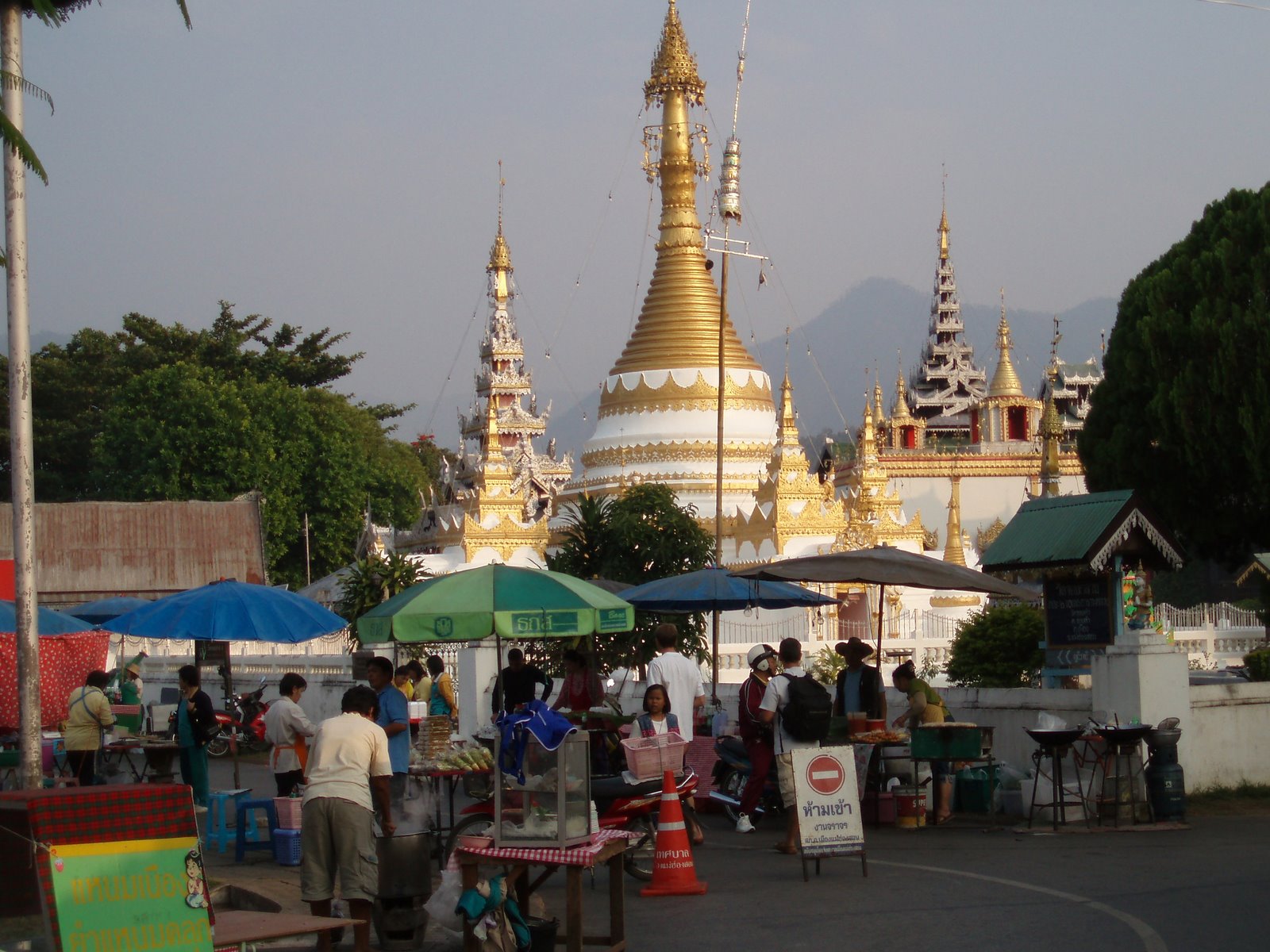 Temples in Mae Hong Son: Wat Chong Khlang contains a Vihara housing a replica of the Phra Phuttha Sihing image brought from Burma in 1857. Click
 The nightmarket: Art and handcrafts from hilltribe people, for example Lisu and Hmong. Click
 The Kuomintang Chinese: Mae Aw near the Burmese Border is a village founded by Kuomintang soldiers and famous for tea cultivation. Click
 By boat to a Karen Village: Karen refugees from Burma live in Huay Pukaen on Pai River, making their money with tourism by showing their longneck women. Click
 The Mae Hong Son Loop: From Mae Hong Son through the rainforest and the mountains to Pai and Chiang Mai Click